
Off the Menu #04 — The Squeak Test
Poutine week in Terrebonne: the squeak test, a forty-minute drive from Montreal, the pineapple guy's third visit — and the book opens to a new page. Dinde.

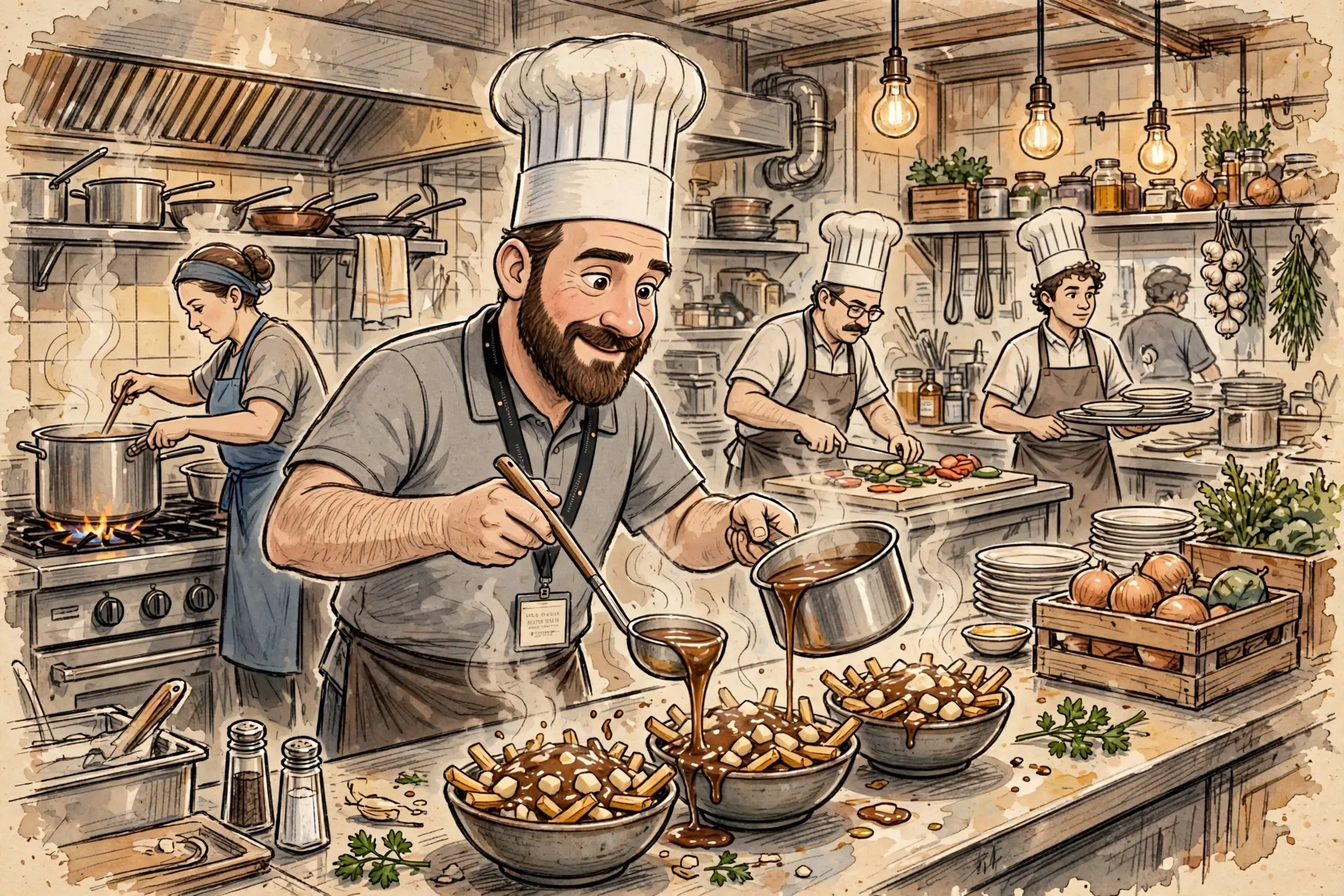
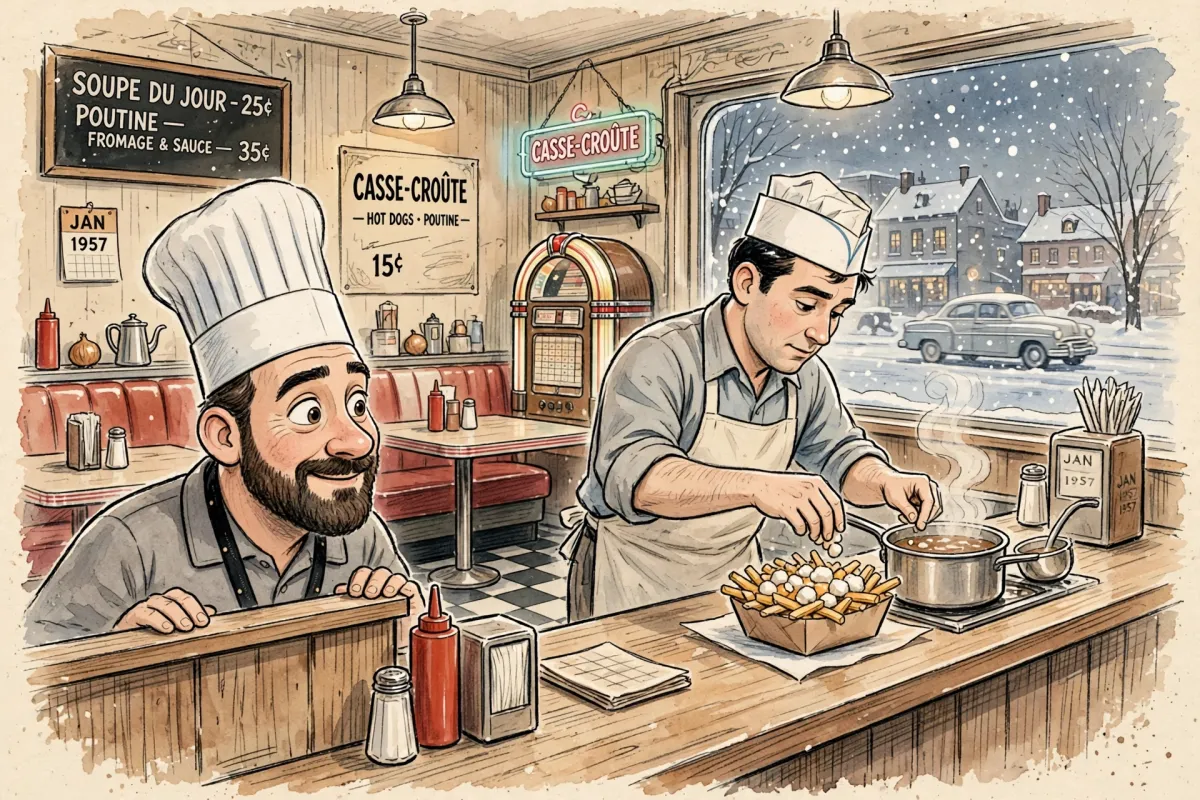
Poutine week at Salt and Myth, and the fryer hasn't stopped since Tuesday. The board by the door says POUTINE, 1957(?) — the question mark is doing a lot of work — and the whole dining room smells like a casse-croûte in the best way.
Before every service I do the squeak test. One curd, room temperature, between my teeth. Skouik-skouik. If it doesn't squeak, it doesn't go on the plate — it goes in the staff meal. The cooks think I'm joking. I'm not joking. A curd that doesn't squeak is a curd that's given up, and I don't serve quitters.
Table nine drove in from Montreal. Forty minutes, in October rain, because someone at their office said the poutine in Terrebonne was worth the trip. The woman looked around the dining room — fourteen tables, the open kitchen — then back at the sign outside. "Salt and Myth," she read. "What's the myth?" "That's the question, isn't it," I said. Then the poutine arrived and she stopped talking entirely. Her husband burned his tongue on the gravy and said it was worth it. It was.
The pineapple guy is back. Third week in a row. He ordered the poutine, ate it in respectful silence, and asked — carefully, like a man who's learned — whether the gravy recipe was a secret. "Everything here is a secret," I told him. "That's the whole restaurant." He nodded like I'd said something profound. I think we're friends now. I'm not sure how I feel about that.
The thing about poutine service is the five-minute window. Fries, curds, gravy at the pass — it goes out now or it goes out wrong. Tonight we had six poutines fired at once, the dining room full, the fryer roaring, and Marco — Marco, who I once had to ban from the tongs — running the pass like he'd been born there. Nobody applauded this time. They were too busy eating.
FOOD FACT
The sandwich is named after a gambler. In 1762, John Montagu — the 4th Earl of Sandwich — was deep in a card game and didn't want to leave the table to eat. He asked for beef served between two slices of bread: no cutlery, no greasy fingers on the cards, no pause in the game. The other players started ordering "the same as Sandwich," and the name stuck. Four hundred years of delis owe their existence to a man who wouldn't fold a winning hand.
THE CLUE
After close I went down to check the curd delivery for tomorrow. The book wasn't behind the water heater. It was on the worktable — open, again, to a page I hadn't seen. A bird, drawn in ink, tail fanned wide. Under it, a single word in French.
Dinde.
I know enough French to know what that means. What I don't know is who keeps turning the pages.
This Off The Menu is the companion to:
 KossMass
Never miss an issue
Get the next secret history first
One story a week. No recipes, no spam — just the real history behind what we eat and drink.
Keep reading
Off the Menu #07 — Watched
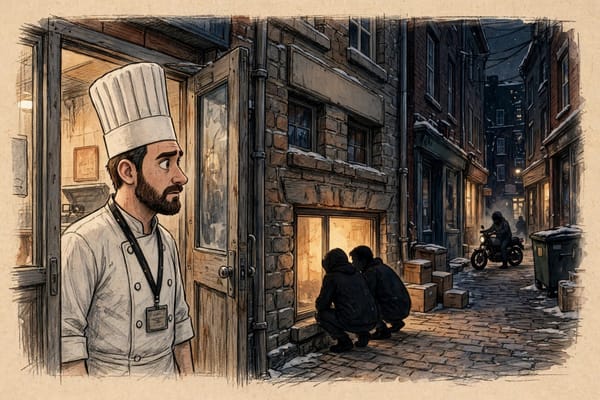
Carbonara week: a cook reaches for the cream, the eggs keep scrambling — and late one night, Daniel finds two people at the basement window, faces to the glass. A third is watching from the alley.
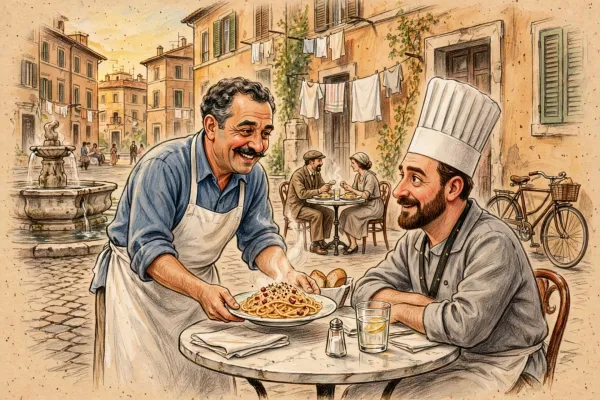
Episode 7 — Carbonara Origin: The True Story (Rome, 1939)
Carbonara was on a Roman menu in 1939 — five years before the American rations it's blamed on. The charcoal myth, the general's dinner, the gruyère scandal, and the rules that arrived last.
Off the Menu #06 — Table Twelve
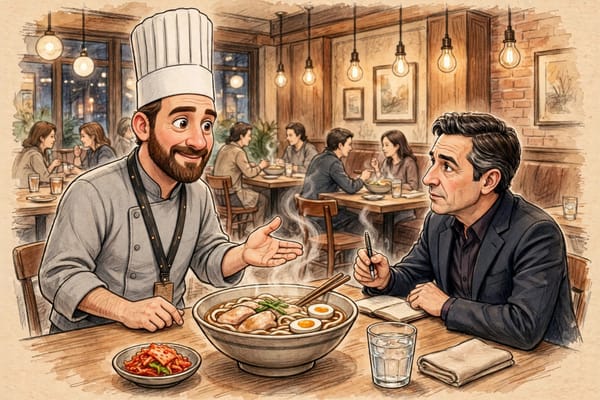
Kimchi week brings a new chicken udon, a full dining room — and a food critic at table twelve who finishes the whole bowl. Later, the book's amber-ringed page gains a garnish.